Shredder Hammer Material Selection: Matching Chemistry to Impact and Abrasion
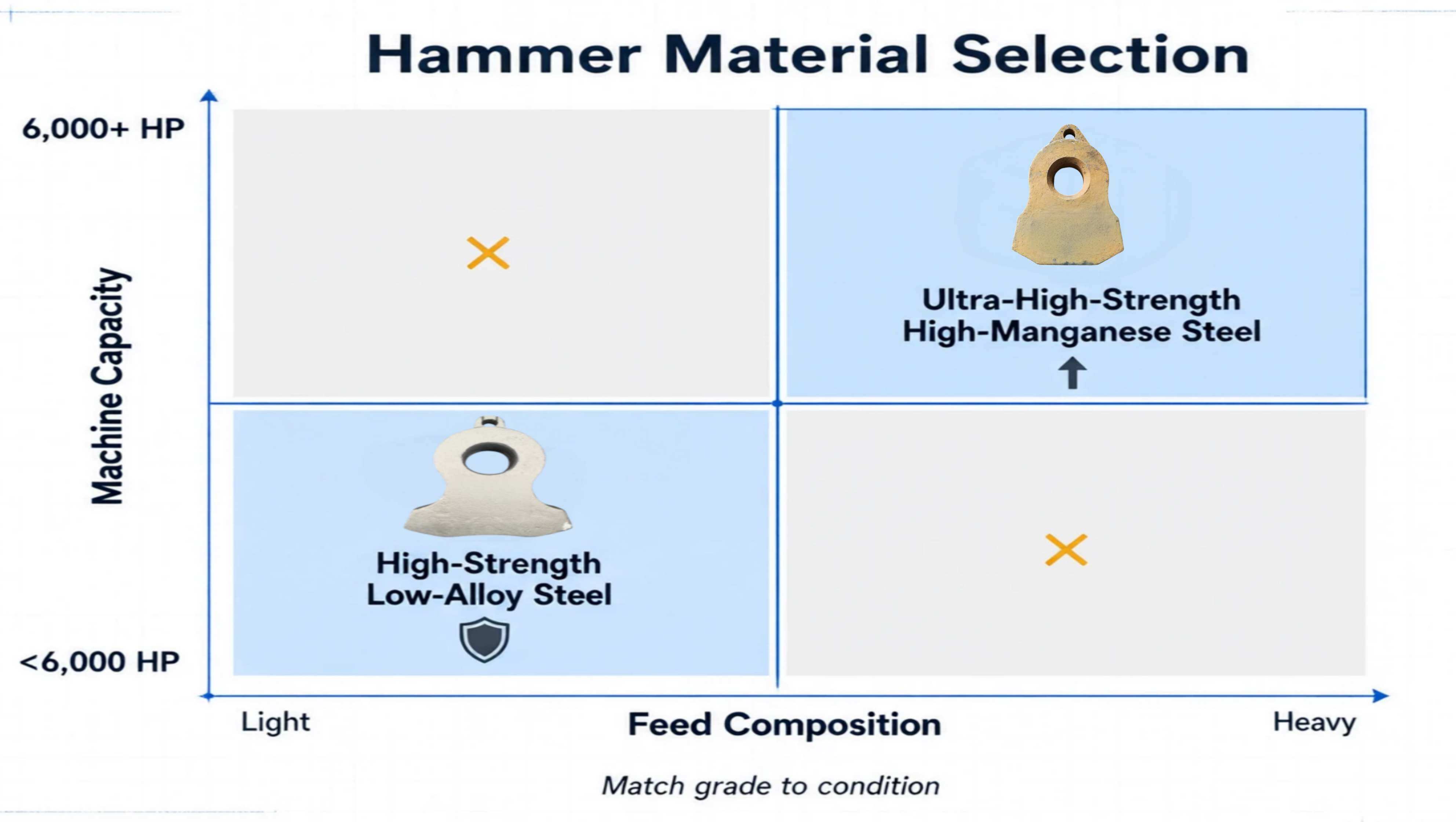
Hammer life depends on matching the material grade to impact energy and abrasive wear. A practical reference for choosing between ultra-high-strength high-manganese steel and high-strength low-alloy steel by feed composition and machine capacity.
In ELV shredding, hammer life depends on whether the material grade matches two forces at work: impact energy and abrasive wear. A mismatch shows up quickly—excessive wear, plastic deformation, or premature failure. At GOLDSTONE, we approach hammer selection as a materials engineering problem, not a catalog lookup.
Heavy Scrap and High-Horsepower Shredders
When the feed includes heavy structural scrap—beams, axles, thick-gauge components—and the shredder operates at 6,000 HP or above, the hammer absorbs repeated high-energy impacts. Under these conditions, standard grades lose hardness rapidly and may deform plastically at the working face.
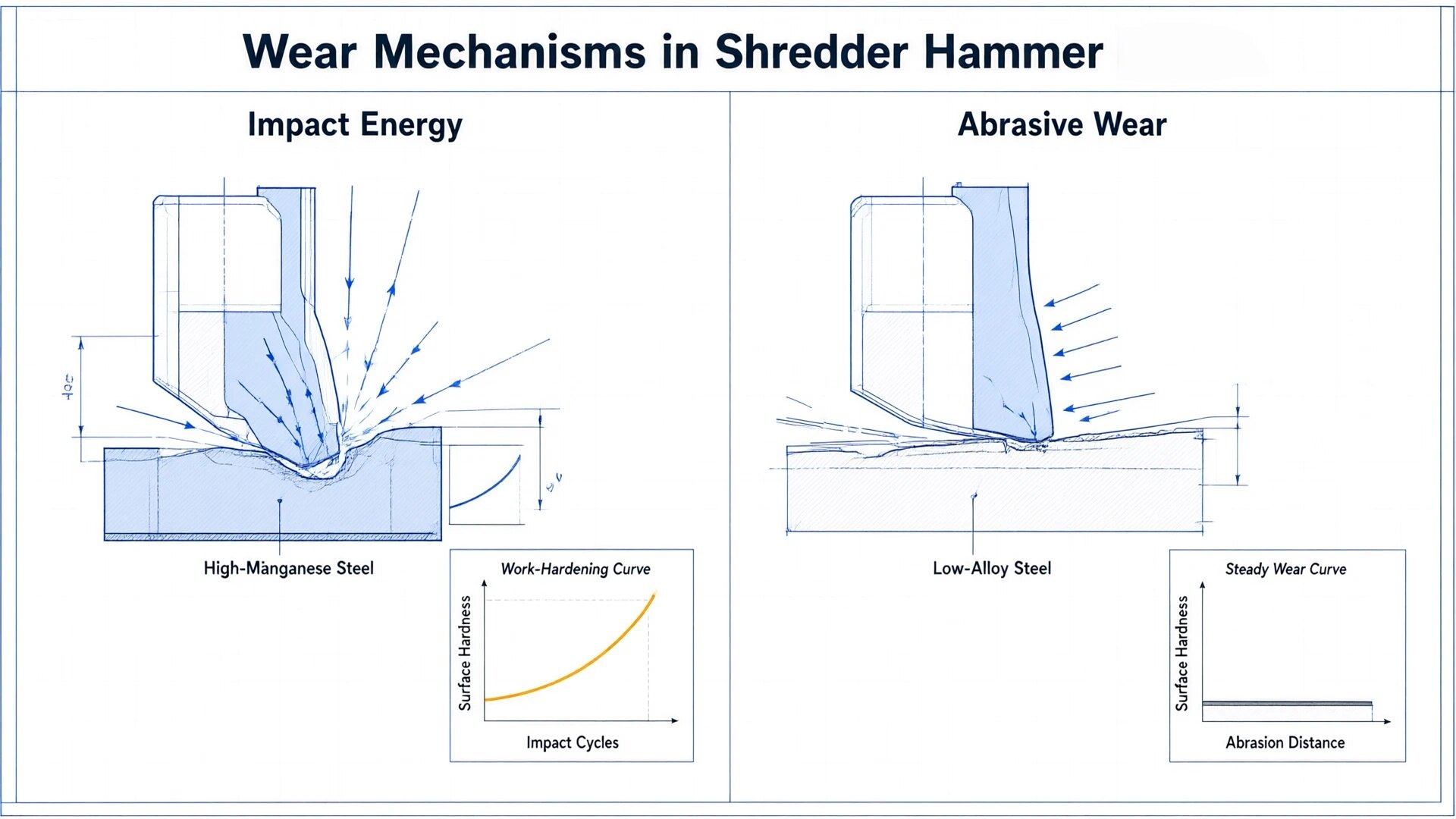
For this duty cycle, we specify ultra-high-strength high-manganese steel. The chemistry is tuned to work-harden under impact: each strike increases surface hardness while the core remains tough enough to resist fracture. The result is a hammer that maintains its geometry through long campaigns on heavy feed. Without this grade, operators see accelerated wear at the tip and edge, requiring more frequent changeouts and risking rotor imbalance.
Light Materials and Lower-Capacity Lines
The wear mechanism changes when the feed is predominantly light—car shells, thin-gauge sheet metal, or small-gauge tubing processed on machines below 6,000 HP. Impact energy per strike is lower, and abrasion becomes the dominant wear mode rather than work-hardening.
In this scenario, high-manganese steel underperforms. Without sufficient impact to trigger its work-hardening response, the surface stays softer than the abrasion demands, and wear rates rise. We instead recommend high-strength low-alloy steel for these lines. The alloy chemistry delivers higher as-cast hardness, resisting abrasive loss without relying on impact-induced hardening. Operators running light feed on alloy steel hammers consistently report longer service intervals compared to high-manganese grades on the same material.
Matching Grade to Condition
The decision reduces to two variables: feed composition and machine capacity. Heavy structural scrap on a 6,000+ HP shredder calls for ultra-high-strength high-manganese steel. Light-gauge feed on smaller machines calls for high-strength low-alloy steel. Each grade is engineered for a specific wear profile—using one outside its design window shortens life and increases cost per ton.
At KINTES, we review the actual feed mix and machine parameters before recommending a hammer grade. Material selection is not a one-size specification; it is a calibration to the condition the part will run in.